If I had to summarize my outlook on life, I would have to say Alexander Pope’s “An Essay On Man” depicted it best when he wrote, “Hope springs eternal in the human breast.” Various interpretations characterize his words: “People will always be optimistic and think something better is coming.” That certainly describes me!
I’ve often thought, “Is it the child in me who wants to see life through rose-colored glasses, or is it my desire to see the best in people and what life offers?” I sense I’m not the only one as I find many who I meet are on the same path as me, looking for those little nuggets along our life’s journey that bring us joy. When you think about it, every month of the year has that little “treat” we refer to as a holiday we celebrate with great anticipation. However, when you look into the history of many of these holidays, their origins are vastly different than how we celebrate them today. We have molded them into a day that makes us feel good and gives us that renewed “optimism.” Think about it. January starts our new year, a clean slate, if you will. Some people look at it as a start of a better year than the previous one. New resolutions are made, and who cares if they are broken a few weeks later, we feel like we got a fresh start. February brings us Valentine’s Day, and who would think we somehow could turn a day honoring 2 Christian martyrs into a romantic day for lovers. March amazes me as St. Patrick would never have deemed people from all walks of life and races would claim their Irish heritage and celebrate it until all hours of the night. Somewhere along the way, the fact that it was to celebrate the arrival of Christianity into Ireland got lost between the corned beef, Irish soda bread, and another round of beer. May brings us spring flowers, Cinco de Mayo, and a day to honor our Mothers. While I understood the significance of Mother’s Day and spring flowers, can someone explain how a kid from New York interprets a day when Mexico celebrates its victory over the French Empire in The Battle of Puebla, known as Cinco de Mayo,” as one he should commemerate as well? June was one of my favorite months as it was not only the month of my birthday but Father’s Day and the start of another great summer. Soon to follow was the 4th of July, and all we could think of were those great summertime barbeques and firework displays and not so much as those who gave of themselves fighting for our independence. While August didn’t have any particular holiday we looked forward to, it was the last month of a summer that was in full swing. Then came Labor Day, and once again, we somehow interpreted this day that originated as an observance of the labor unions contributions to the U.S. economy, as almost a weekend of rest and one final celebration before heading back to the drudgery of another school year. If you were like me, I bet you couldn’t wait for Halloween to arrive, and whoever would have thought we could have turned a day of observance for the deceased, martyrs, and saints into a night of ghoulish activities, costumes, and shopping bags full of candy! November brought Thanksgiving, which not only was the beginning of the holiday season but seemed to make us a bit more appreciative of the things for which to be grateful. There was a desire to savor the day in the company of family and friends, and it was perhaps one of the few holidays that genuinely made us reflect on the significance of that day. Then came Christmas for those of the Christian faith, and like most kids, it was a day we looked forward to since the end of summer. While it was supposed to signify the birth of Jesus Christ and God’s plan to bring salvation to the world, somehow, our focus was more about the gifts we showered on each other, and the Christ child in a manger got hidden behind that new bicycle and the mountain of toys.
 I bet you think I forgot about April, didn’t you? For many, it represents the month that “God giveth and the taxman taketh away.” Perhaps Easter is God’s way of helping us endure that pain; however, Easter represents much more to me. The beginning of spring was starting to bloom. The air seemed fresher, and everything seemed to come back to life. As a child, my early recollections were of an Easter Bunny delivering a brightly colored basket full of jelly beans, a chocolate cross and rabbit, and a stuffed baby duckling, all nestled on a bed of colored cellophane grass. But, of course, no Easter would be complete without the dying of eggs and the Easter egg hunt that soon followed. As I got older, I thought, what sense did all of this make. Easter is supposed to be a celebration of the risen Christ and the hope of many for eternal life, and somehow we have a rabbit delivering colored eggs and candy. Did someone tell the rabbit he walked onto the wrong movie set?
I was relieved to find, according to Time, this “egg-laying hare” stems from a pagan tradition known as the Festival of Eostre, which honored the goddess of fertility and spring. It is said the goddess’s animal symbol was the rabbit, which stood for high fertility and reproduction rates. If you live in my community you will see first-hand the rabbits have successfully continued this time-honored tradition! However, in the 1700’s, German Immigrants coming to Pennsylvania brought this tradition of “Osterhase” or “Oschter Haws,” an egg-laying hare that would lay colorful eggs and give them to good children. I can’t tell you my relief as I must have been one of the good ones, or of mistaken identity, as I always awakened to a big Easter basket full of every sugar-filled treat known to man!

 Wasn’t it just yesterday when we made our New Year’s Resolutions? I know I put them around here somewhere in my start to the New Year promise to myself. Is it me, or did someone misplace January? That seems to be missing as well; however, my calendar says it’s going to be Valentine’s Day in a few days. Is it possible for me to get a do-over?
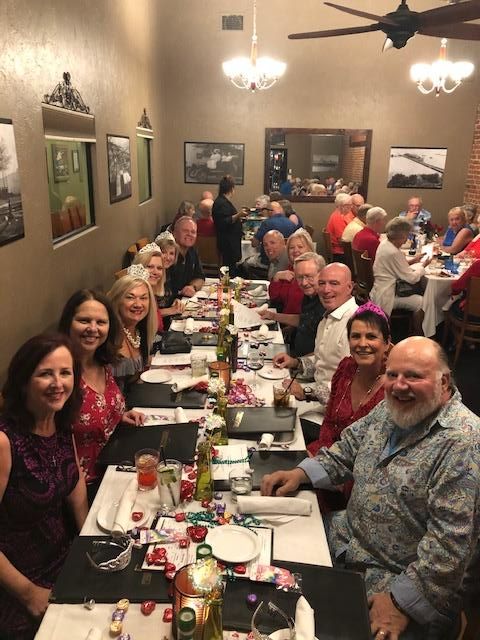 Everyone has a story or knows of someone who has a storied background, but when you have the opportunity to spend as much time with clients as we do, their histories come to life in a way that makes you feel as if you went through a time with them. I remember one client who had been in the largest naval battle to this day. He was on a 500 ft. aircraft carrier in the Philippines and to listen to his story of the incoming fire they took, you couldn’t help but feel you were right alongside him. Other clients spoke of Communist regimes they escaped and how their families lost everything they had to come to our country. Others have been in the entertainment industry, some have been writers and still, others have created products that are widely used today. There have been CEOs and those that rose from poverty to creating highly successful businesses, going on to mentor others so they could have an opportunity to better themselves. We’ve also heard countless stories from physicians, who without fanfare traveled abroad to many third world countries administering to those in need, and did I mention a Grammy award-winning Pastor whose lives he continues to touch each day? For those of you whose stories have appeared in our newsletters you know who you are, and how your stories have had such an impact on my life, as have so many others.
 Thanksgiving to me has always been the start of the holiday season. It’s a time where people seem to be a bit more appreciative of the things they’ve received and a desire to share those blessings with others. While we typically think of family and friends sitting around a large dining table decorated in a harvest motif, adorned with a variety of homemade dishes and a succulent roast turkey, I find in recent years my sentiments have turned more to ways we can share our abundance with others less fortunate. However, my thoughts this Thanksgiving season were inspired by a story I recently heard at church from a very special lady whose mission trip years ago to Nicaragua exemplified the true meaning of gratitude that will impact me for the rest of my life.
 Gwen initially moved to Punta Gorda to care for her elderly mother who was suffering from age-related dementia, but needing to work, she added, “no one gets rich being a nun for 30 years,” she applied to Sacred Heart Church. Pastor, Jerome “Jerry” Kaywell recognized Gwen’s talents immediately and hired her to be his Pastoral Associate. Technically her role is defined as meeting the pastoral needs of the people of the parish however, to those who know her contributions her handprint can be found in almost every corner of the church. Gwen reflects, “Giving was a family thing. My Mom was very attentive to the needs around her and she seated the responsibility to help others deep in our hearts from my earliest memories. She would often adopt a project and we were always a part of the service.” She recalls one of the most “powerful” examples was when her mom “adopted” a man who lived a few miles from them. The man wasn’t related to them and didn’t have family to take care of him. Gwen’s mother decided that once a month they would bring him food she had frozen from what she made the family the month before. Then on a Saturday every month for years, they would clean his house, tidy his yard, plant flowers, and bring in wood, as he heated his home with only a wood stove. This care for others leads us to the inspiring story Gwen shared with the congregation that touched the lives of everyone present.
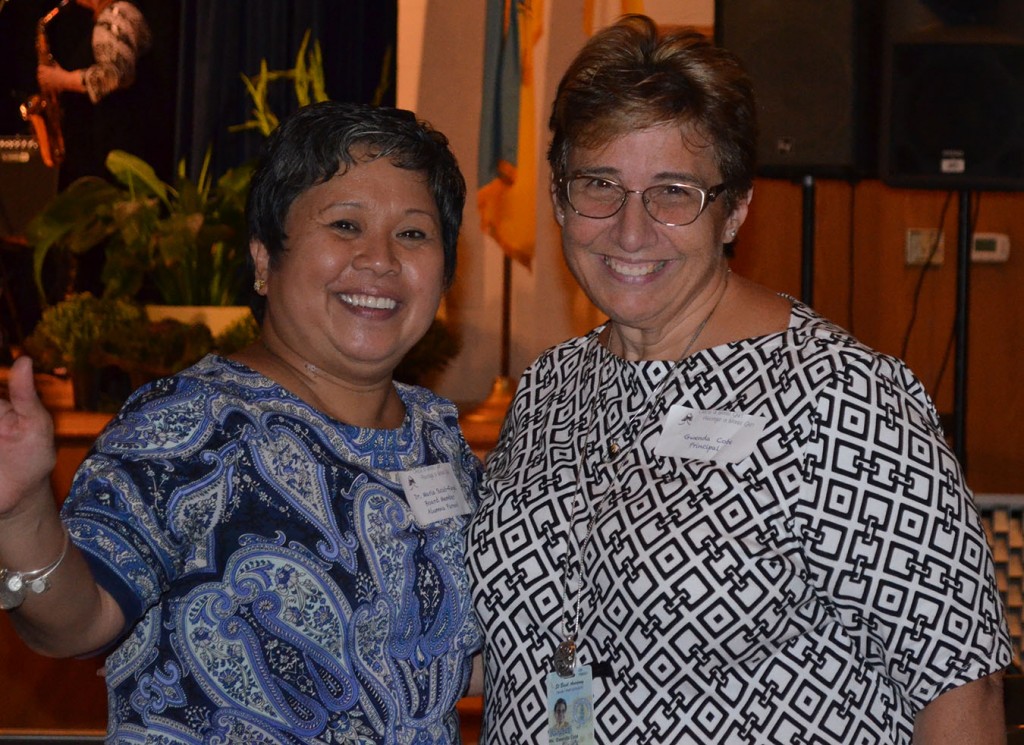 Looking back during the time she served as Principal of Seton Catholic High School in Plattsburgh, Gwen said for several years she had been involved with a group called “Mission of Hope.” Created as a result of a mission trip to Nicaragua that was inspired by one family from Nicaragua who attended the school to help their family back in their homeland recover from the mudslides from a devastating hurricane, this non-profit took on a “life of its own.” Today, Gwen adds, “it serves the people of Nicaragua in a multitude of ways from hospitals to eldercare, food to clinics and education to hope.” However, it was that trip to Nicaragua that left a lasting impression.
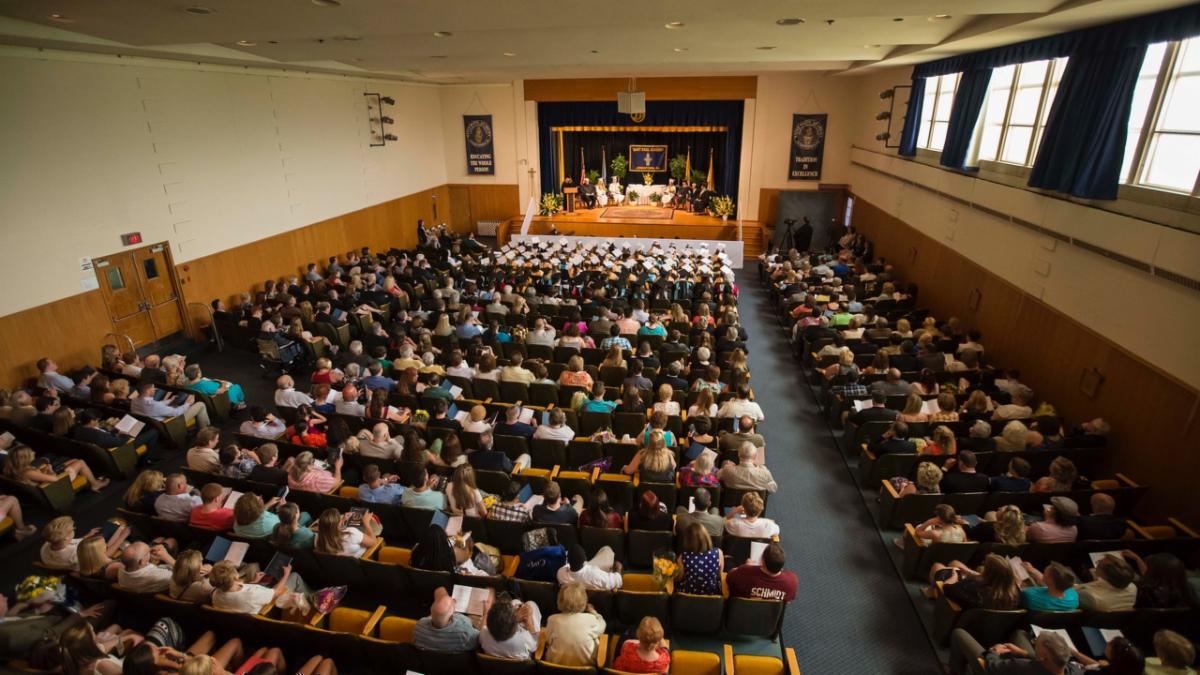 Gwen’s story reminded me of the bible story of the “Widow’s offering,” found in the twelfth chapter of the book of Mark, verses 41-44. It tells how Jesus sat down opposite the place where the offerings were placed and watched the crowd putting money into the temple treasury. “Many rich people threw in large amounts, but a poor widow came and put in two very small copper coins worth only a few cents.” Jesus called his disciples to him and said, “Truly I tell you, this poor widow has put more into the treasury than all the others. They all gave out of their wealth, but she, out of her poverty, put in everything; all she had to live on.”
 While most people would like to talk about themselves, Gary and Gail have always put their clients first, and their diverse backgrounds have provided their clients an unparalleled level of service and knowledge throughout the past years.